

What Is Bait Al Quran?
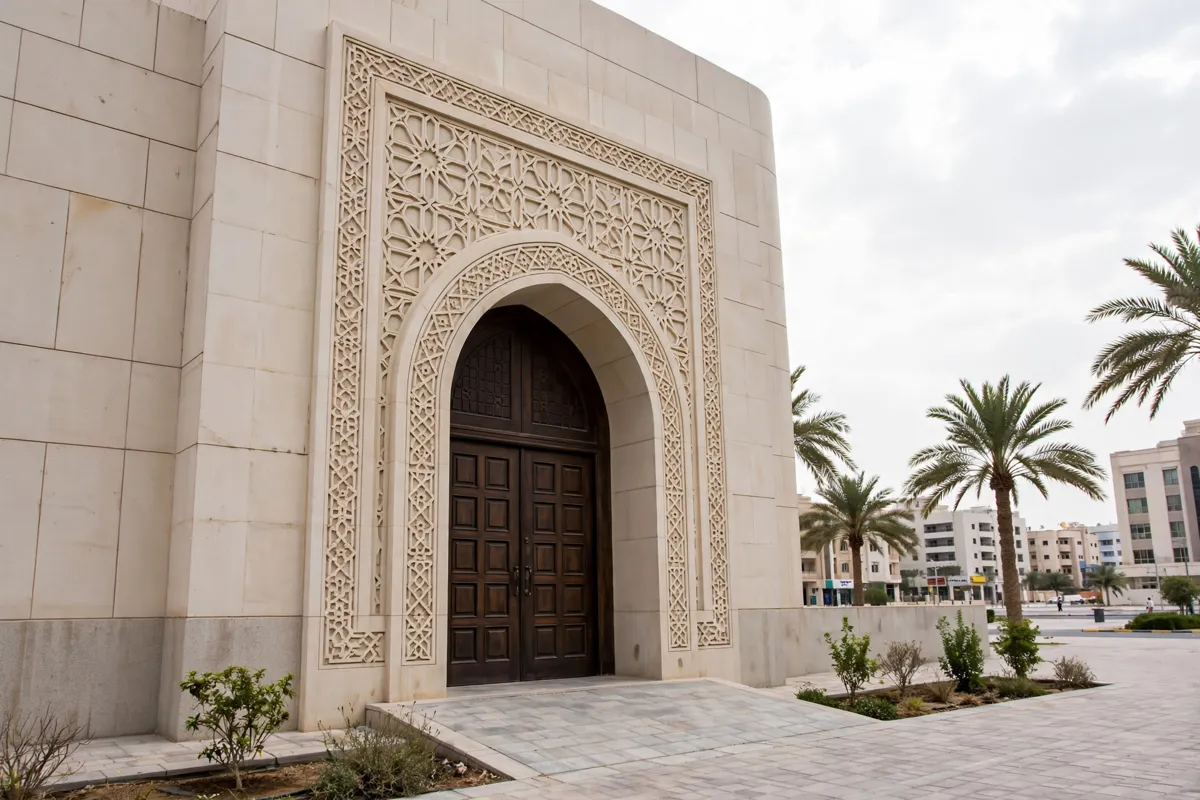
Bait Al Quran, also called Beit Al Quran, is a cultural complex in central Manama. Alongside its museum, it includes a mosque, library, lecture hall and Quran memorization school. Its combination of religious, cultural and learning functions follows the concept of traditional madrasas attached to mosques in the Islamic world.
Bahraini collector Dr. Abdul Latif Jassim Kanoo founded the institution in 1990. He donated his own collection of Quranic manuscripts and Islamic art, built over years of studying public and museum collections while travelling and studying abroad. The institution also grew from a public fundraising drive and donations from Kanoo.
Its purpose goes beyond displaying objects: the complex was conceived to preserve historic manuscripts and serve the Quran. Kanoo described its role as custodianship for future generations. The institution’s work includes permanent and visiting exhibitions, manuscript conservation and restoration, publishing, research, lectures and seminars.
For a different museum focus in the capital, compare it with this guide to the Bahrain National Museum. Bait Al Quran’s emphasis is Quranic manuscripts and related Islamic art.
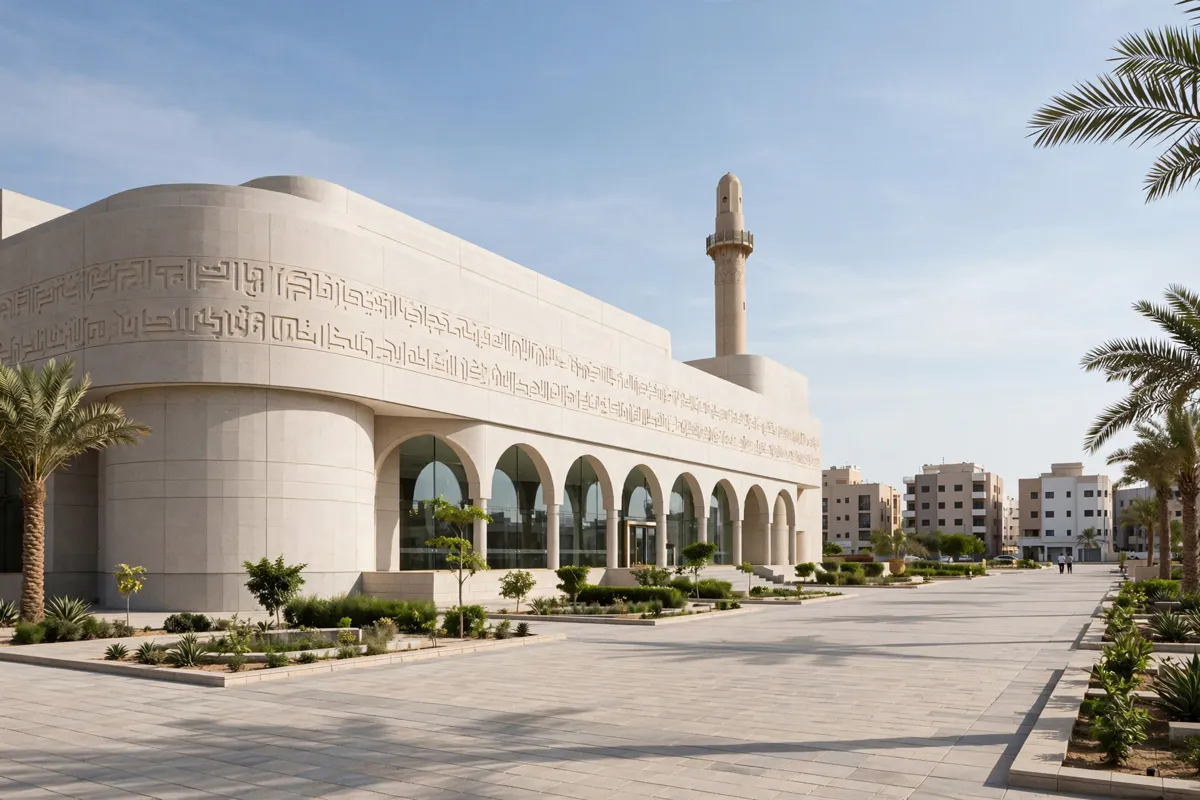
What Visitors Can See
The museum displays approximately 10,000 Quran copies and manuscripts from around the world, spanning from the 1st century AH to modern times. The collection includes manuscripts from Cordoba, Kairouan, Cairo and China. Some early Arabic-script copies have no diacritical marks, offering a glimpse of how the written text appeared in earlier periods.
Among the collection’s notable works is a Quran manuscript described as dating from the time of Caliph Uthman bin Affan. Other highlights include the first printed Quran, produced in Germany in 1694, and an early Latin-translated Quran from Switzerland dating to around 1548.
These objects reflect the spread of Quranic texts across regions and languages, as well as different stages in the history of printing and translation.
Not every item is a bound manuscript. Quranic words are inscribed on grains of rice or chickpeas, and the collection also includes gold, copper, ceramic and glass artefacts from different historical periods. Together, these objects give the museum a broader scope than manuscripts alone.
The complex’s library holds more than 60,000 publications, mainly on Quranic studies, in Arabic, English and French. It provides study spaces for scholars and researchers. The mosque has a circular design, with a stained-glass dome made in Britain and decorated with Quranic calligraphy by Egyptian artist Ahmed Moustafa.
Its ceramic mihrab was made by a Turkish artist. The complex brings these distinct spaces together, though official listings do not clarify which areas are open to general visitors.
Visitor Hours and Entry
Official listings give different schedules. Bahrain Tourism lists Sunday–Wednesday hours as 8:30 a.m.–2:30 p.m., Thursday and Saturday as 8:30 a.m.–1:30 p.m., and Friday as closed. The Bahrain Authority for Culture and Antiquities lists Saturday–Wednesday hours as 9:00 a.m.–12:00 p.m. and 4:00–6:00 p.m., and Thursday hours as 9:00 a.m.–12:00 p.m.; its listing does not state Friday hours.
The listings also give different contact numbers: Bahrain Tourism gives +973 1729 0101, while the Bahrain Authority for Culture and Antiquities gives 00973 1729 0404.
The official tourism and culture pages do not specify an admission fee, whether reservations or identification are required, or which collection areas general visitors can enter. Plan around the discrepancy rather than assuming an afternoon opening is available. You can check the official site before you go, particularly if timing matters.
Bahrain’s tourism authority recommends covering your shoulders and knees when visiting religious locations. This is general guidance, not a stated Bait Al Quran-specific dress rule. The official pages consulted also do not state specific photography rules.
How to Reach Bait Al Quran from Juffair
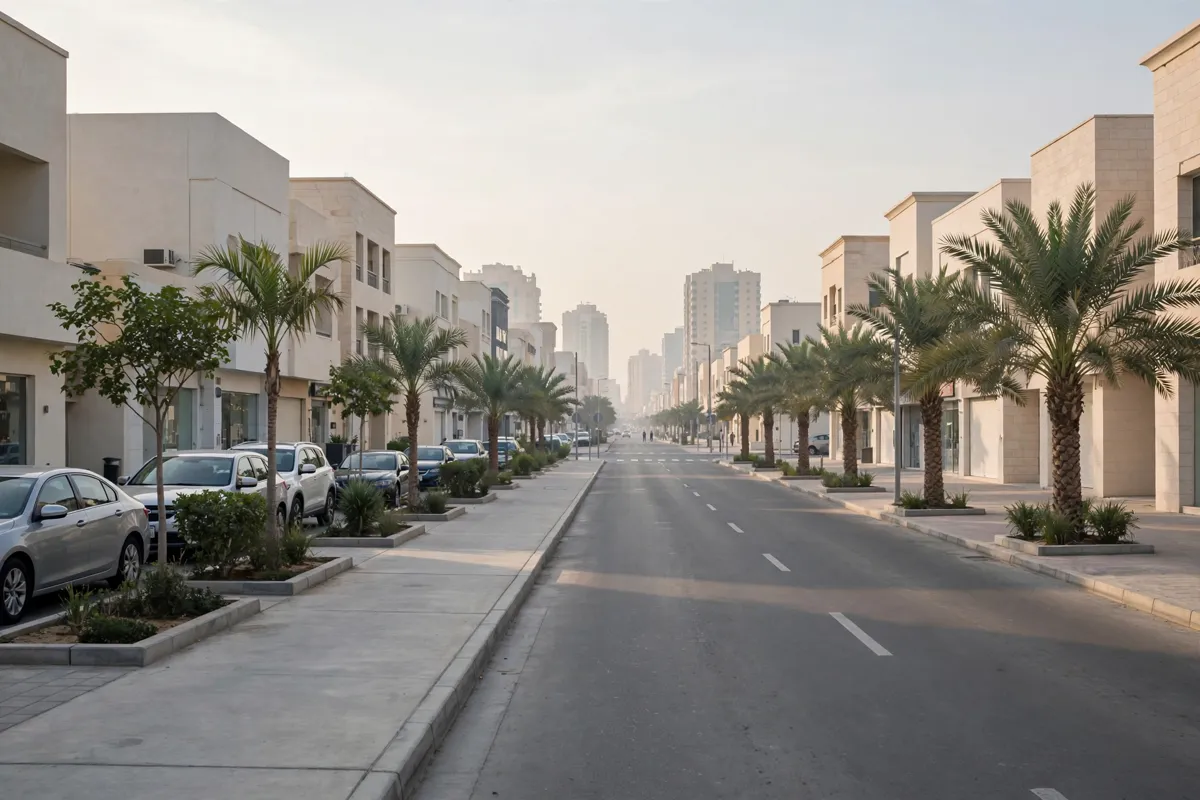
Bait Al Quran is about a 14-minute drive from The Spot Residence, or about a 52-minute walk. It is in Manama, off Exhibition Avenue in the Diplomatic Area. The available information does not give specific directions or travel time from Juffair, so use the location details to plan your route.
If you are building a wider day around the area, the Manama itinerary near Juffair can help you consider other stops. The Bahrain National Museum is another distinct museum option in Manama; check its own visitor information when planning a visit there.
Practical Notes Before You Go
Because the official schedules and contact numbers differ, confirm the details directly before setting out, especially if you are planning around afternoon hours.
The published information does not specify Bait Al Quran-specific photography rules, an admission price, reservation or identification requirements, or which areas are accessible to general visitors. A call ahead can help clarify the practical details that the listings leave open.
Keep the complex’s different roles in mind when planning your visit: the museum collection is only one part of an institution that also supports study, conservation, research and religious life.
If your main interest is the manuscripts, allow your schedule to accommodate the museum’s confirmed visiting hours; if you hope to see other spaces in the complex, ask which areas are open to visitors.